
Original AI call analysis data from 10,661 real customer service calls: what agents skip, what separates your best and weakest agents, and what a 2% manual QA sample misses.

AI call analysis uses speech to text and artificial intelligence to review every recorded customer call. It transcribes the conversation, scores it against your own quality checklist, reads customer sentiment and pulls out the follow-up actions the agent promised. Instead of a manager listening to a few calls a week, every call gets checked.
We wanted to know what that actually shows in practice. So we looked at 10,661 real customer service calls analyzed with Parnidia AI call analytics between December 2025 and October 2026: 522.7 hours of audio, 22 companies and 112 human agents, mostly Lithuanian customer service teams. The problems were not where most managers look.
Source: Parnidia AI call analytics data, 10,661 customer service calls, 22 companies, Dec 2025 to Oct 2026
AI call analysis is the automatic review of phone conversations by AI. It turns call recordings into text, then evaluates each conversation the way a quality assurance specialist would: did the agent greet the customer, understand the need, give a clear answer and agree on next steps? On top of the score, it detects customer emotions, tags call topics and lists every action someone promised to take.
It is often confused with call tracking. Call tracking tells you where a call came from, such as which ad or campaign made the phone ring. Call analysis tells you what happened inside the call. For a contact center, that is the part that decides customer experience, repeat calls and churn.
You will also see it called call analytics, conversation analytics or AI powered call analytics. The idea is the same: extract insights from call data that used to sit unheard in recordings. Traditional call quality monitoring in a call center means a supervisor listening to a handful of calls and filling in a scorecard. AI call analytics does the same call monitoring on every call, with the same quality metrics, and turns the results into actionable insights for coaching and service quality.
Most AI powered call analytics tools follow the same five steps. The difference between tools is in accuracy, flexibility of the criteria and how the results reach your team.
The behaviors managers worry about most are almost never the problem. Across 58,631 criterion checks, agents stayed polite in 96% of calls, let the customer finish in 97% and showed they were listening in 97%. The failures sit in the routine around the conversation: the opening and the close.
Courtesy is solved. The open and the close are not.
Share of applicable calls where the agent skipped each behavior. Each company scores its own checklist; criteria grouped into shared themes.
The pattern held across companies, not just one large team. Asking whether the customer needs anything else was skipped in 47%, 89% and 96% of calls at the three companies with the most evaluations. Saying their own name was skipped anywhere from 11% to 95% of the time across the seven largest teams.
These are the steps every manager assumes happen on every call. They are also the steps nobody notices when listening to a few calls a month, because the conversation itself sounds fine. That is the core weakness of manual call monitoring: it checks the call you happen to pick, not the habit across thousands of calls. Yet these small habits shape customer satisfaction more than most managers expect, because they decide whether a call feels personal and finished.
The difference between your best and weakest agents is not attitude. We split agents with at least 30 scored calls into thirds by QA score, within the same team and checklist, and compared what each group skipped.
Your weakest agents are just as polite. They skip the first 10 seconds.
Share of calls where the behavior was skipped: top third vs bottom third of agents by QA score, within the same team and checklist.
The bottom third skipped the greeting in 67% of calls, against 18% for the top third. They skipped their own name in 56% of calls, against 11%. On politeness and listening, the two groups are almost identical. In every team we looked at, the best and weakest agent were 8 to 11 points apart on the same checklist.
| Team | Best agent | Weakest agent | Gap (pts) |
|---|---|---|---|
| Team A | 98.0% | 87.2% | 10.8 |
| Team B | 81.3% | 72.9% | 8.4 |
| Team C | 89.6% | 80.6% | 9.0 |
| Team D | 63.3% | 54.4% | 8.9 |
| Team E | 92.2% | 83.4% | 8.8 |
Average QA score per agent, agents with 30+ scored calls, five teams of 3 to 12 agents. Same checklist within each team.
One honest caveat: the weakest agents resolved almost as many calls as the best ones (80% vs 81%). The gap is in how the call feels and how consistently your brand sounds, not in whether the problem gets fixed. That makes it the cheapest coaching win you have. A greeting and a name take ten seconds, and AI shows you exactly which agents skip them, so targeted coaching replaces generic training.
30% of calls had a customer who was frustrated, confused or worried at some point. Those calls were resolved 70% of the time, against 82% for calm calls. What the agent did in those calls mattered far more than in calm ones.
When the customer is upset, the basics are worth 4x more
Extra resolution rate, in percentage points, for calls where the agent did the behavior vs skipped it.
In calls with an upset customer, asking clarifying questions went with a resolution rate 13.5 points higher than skipping them. In calm calls the same behavior made a 3.4 point difference. Summarizing the customer's need back showed the same pattern, +7.2 points against +4.1. This is a correlation, not proof of cause, but it held at both companies with enough tense calls to test it.
The practical lesson is simple: when the emotional tone of a call turns, slow down. Ask one more question, then repeat the problem back in one sentence before offering a solution. Sentiment tracking makes these calls easy to find, so you can coach on real examples instead of role play.
Short calls look efficient, but they resolve worst. Calls under one minute made up 24% of the dataset. They were resolved 70% of the time, against about 81% for calls of one to five minutes, and they scored 79 points on quality against about 87.
The shortest calls are the least likely to be resolved
Share of calls resolved during the call, by call length.
This held at all five companies with enough short calls. Longer calls do carry more emotion: 14% of calls under a minute had an upset customer, against 42% of calls lasting five to ten minutes. But even the long calls were resolved about 79% of the time.
If your team is measured on average handle time, this is worth a second look. Pushing calls shorter can quietly turn into rushed answers and repeat calls. Review the under-a-minute calls as their own group, and you will usually find transfers and quick answers that never actually closed the issue.
Traditional call center quality assurance reviews a small sample, usually 1% to 2% of calls. There is a good reason for it: listening once to the 522.7 hours in this dataset would take 65 full workdays. And as call volume grows, the share of calls anyone actually hears only shrinks. A small sample is also why the patterns above stay invisible.
Source: Parnidia AI call analytics data, 10,661 customer service calls, 22 companies, Dec 2025 to Oct 2026
962 calls ended with an upset customer and no resolution. A 2% sample would put about 19 of them in front of a reviewer. The other 943 would never be heard. The same goes for promises: 1,841 of the 2,301 unresolved calls ended with the agent promising a callback, an offer or a handover to another department. Without a list of those promises, there is no way to check that they happened.
AI does not replace human review. It changes what humans review. Instead of random calls, quality teams get the calls that matter: upset customers, missed steps, unresolved issues and open promises. Manual review becomes faster and far more useful, and the whole quality assurance process moves toward continuous improvement instead of monthly spot checks.
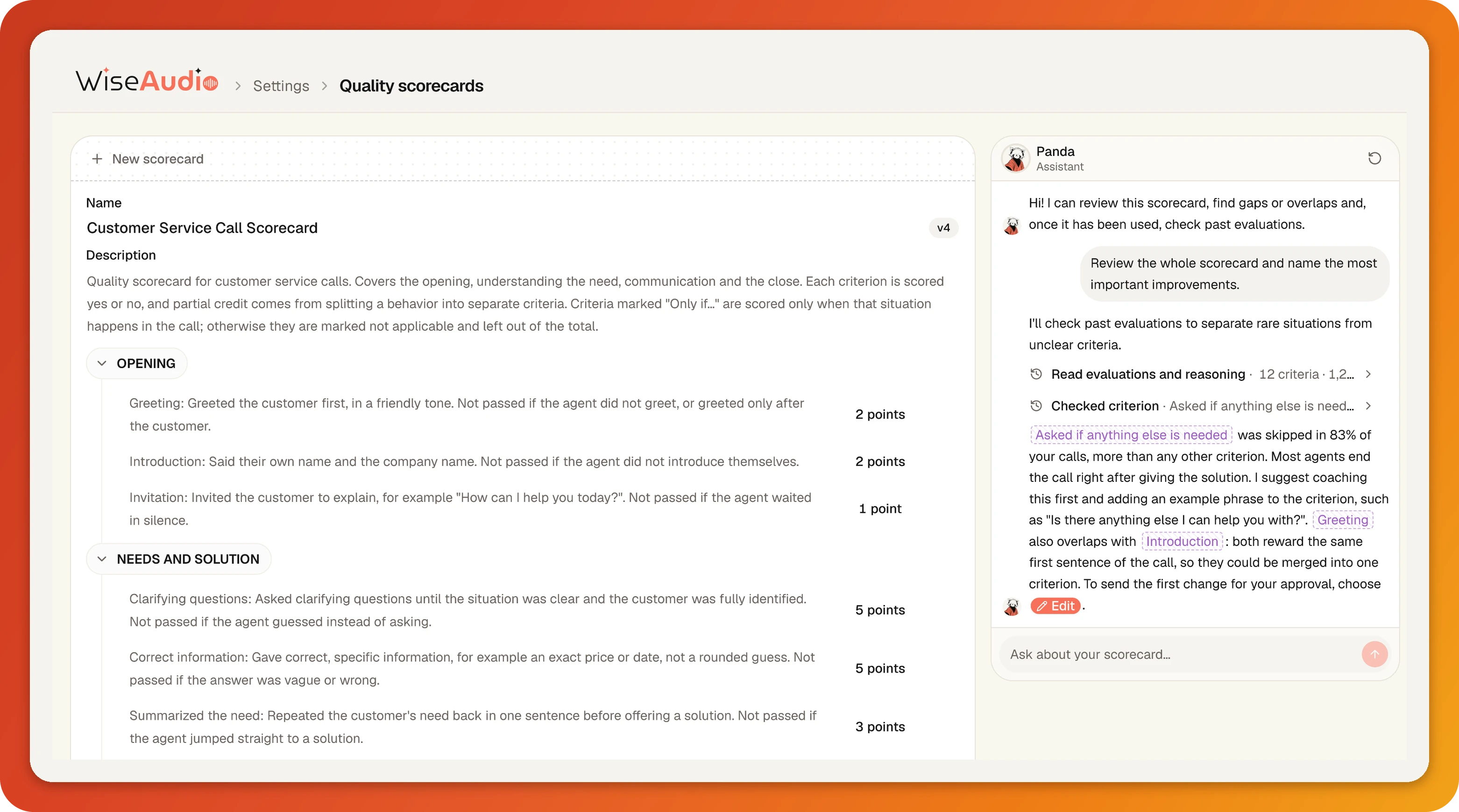
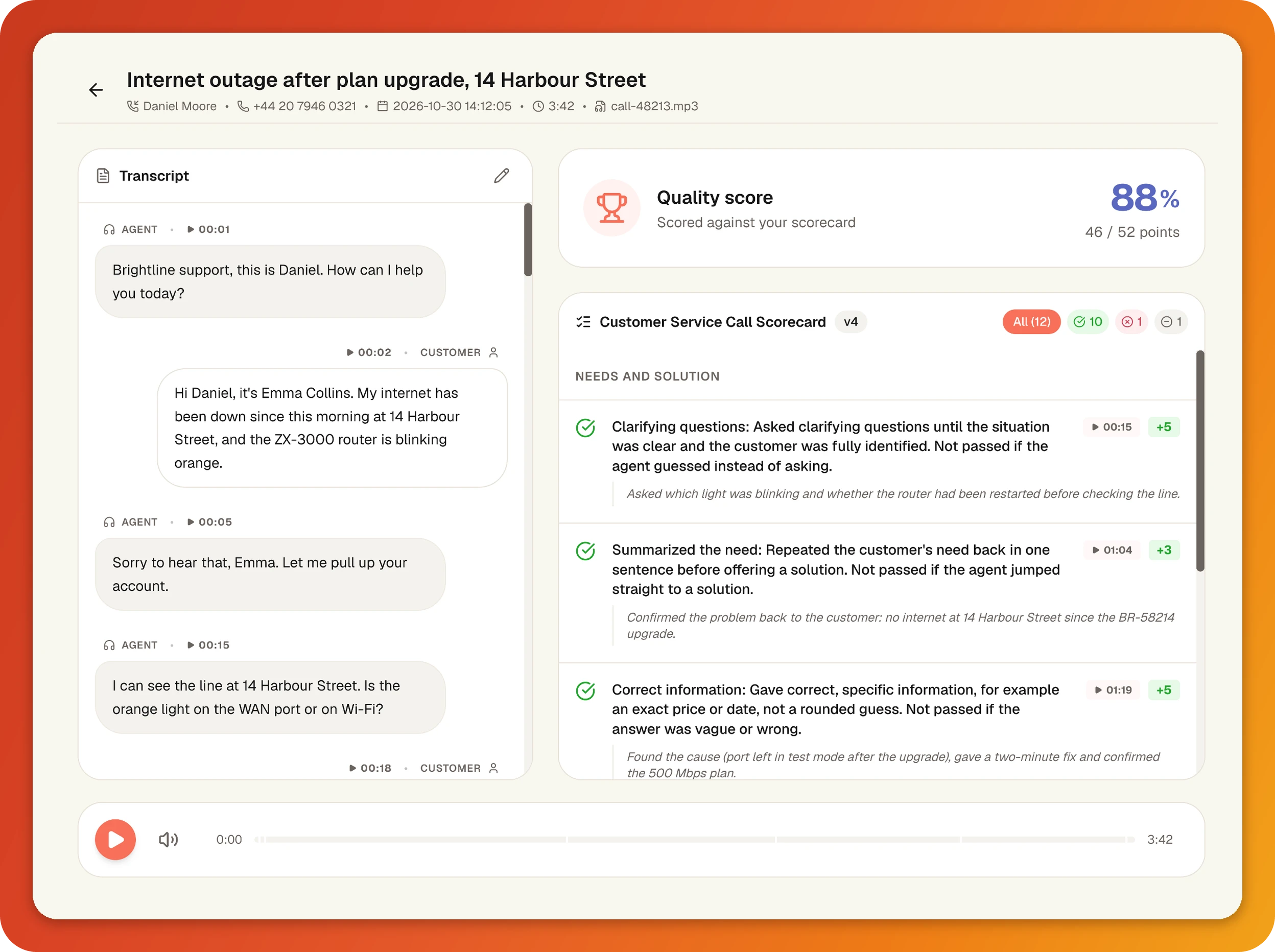
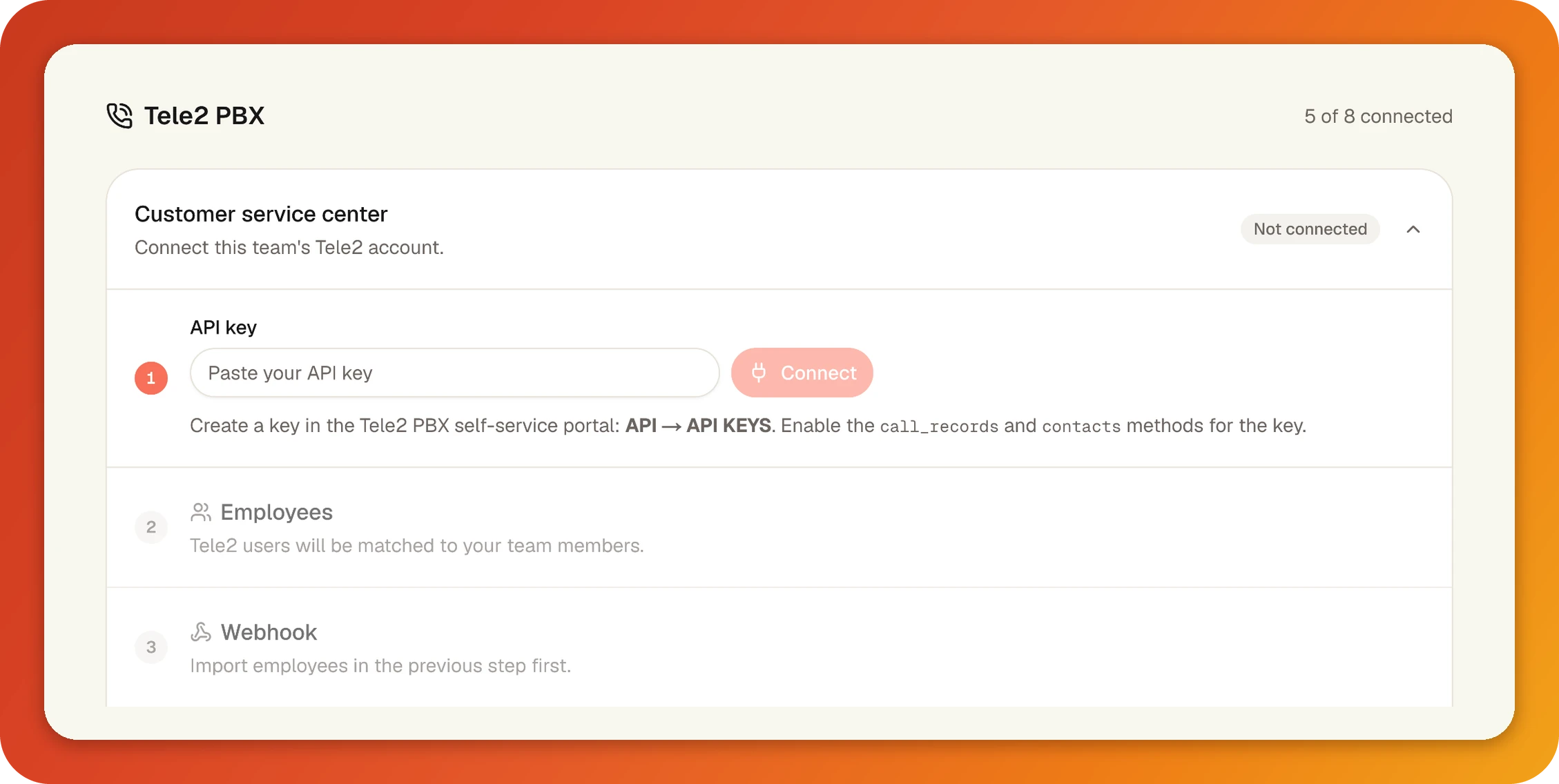
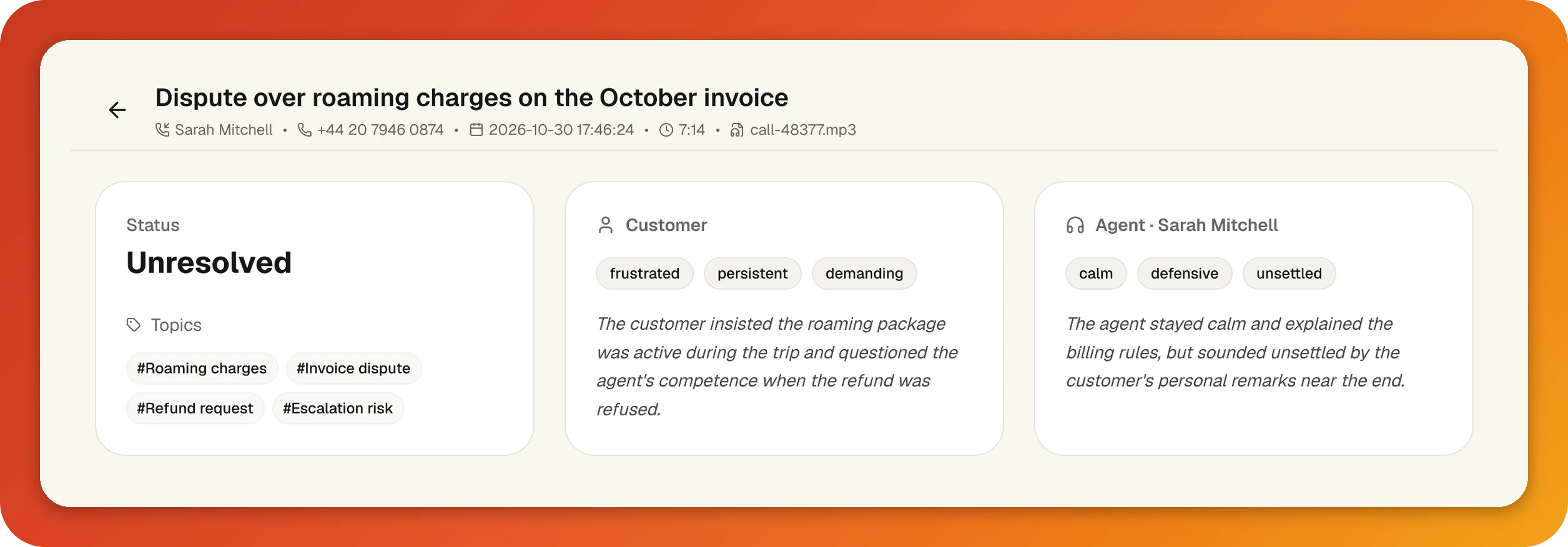
With Parnidia, you get access within one day and a 14-day trial with up to 10 hours of calls analyzed. Scored calls, coaching and quality tracking all live in the AI-first Helpdesk. Connecting Tele2, Telia, Bite or Baltneta (TellQ) is free.
Want to see these numbers for your own team? Try AI call analytics on your own calls, free for 14 days.
AI call analysis uses speech to text and artificial intelligence to review recorded phone calls automatically. It transcribes every call, scores it against your own quality checklist, detects customer sentiment and pulls out follow-up actions, so managers can review 100% of calls instead of a small sample.
Call tracking shows where calls come from, such as which ad or campaign made the phone ring. Call analysis looks at what happened inside the call: what the customer needed, how the agent handled it, how the customer felt and whether the issue was resolved.
Write a short checklist of behaviors that matter for your team, such as greeting, identifying the need, giving a clear solution and confirming next steps. Then score calls against it and track the results per agent and per topic. AI call analysis applies the same checklist to every call, which removes sampling bias and reviewer drift.
Manual QA teams usually review 1% to 2% of calls because listening takes time. In our data, a 2% sample would have caught about 19 of the 962 calls where an upset customer ended without a solution. AI makes it practical to monitor every call and send only the problem calls to human review.
Yes, if the speech to text model is trained for the language. Parnidia measures around 98% transcription accuracy on Lithuanian calls, and higher on widely spoken languages such as Polish and English. Accuracy is the first thing to test on your own recordings during a trial.
Yes, when the provider is set up for it. Parnidia AI Call Analytics is GDPR compliant: call data is processed only in the EU, encrypted, and deleted from AI model storage after 30 days. See the details on our trust page. Whatever tool you use, customers should also be told that calls are recorded and analyzed, as with any call recording.

Leo Mazzura
Co-founder & CEO @ Parnidia

Book a demo. We’ll show examples from similar clients and walk you through the software.


